

Gastroesophageal reflux: when is surgical treatment indicated?
When is reflux surgery indicated? Understand gastroesophageal reflux, its symptoms, diagnosis, and the medical and surgical treatment options.
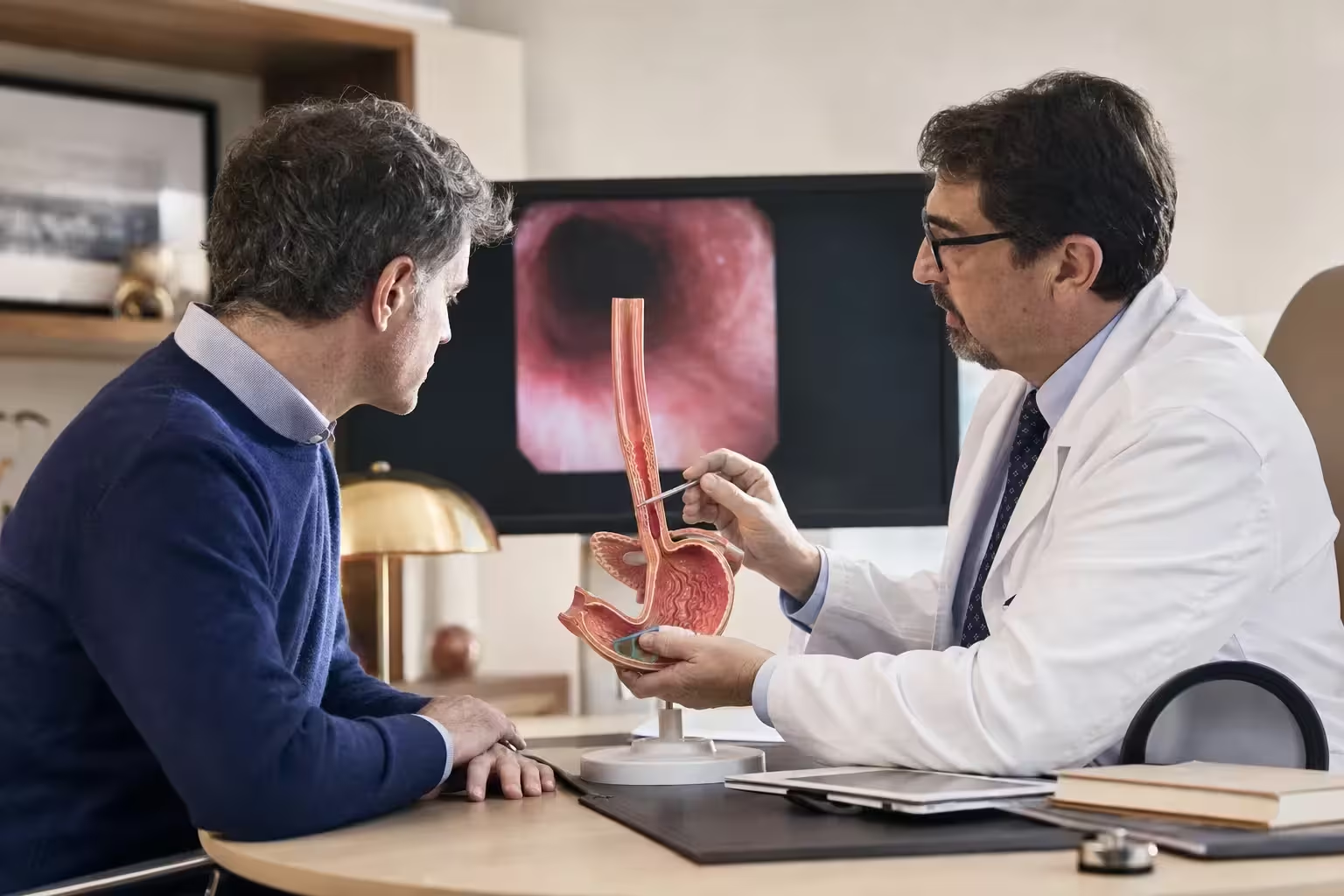
Reflux surgery is one of the most frequent questions among people who live with gastroesophageal reflux and do not get satisfactory relief from medication. Before considering an operation, however, it is important to understand that gastroesophageal reflux is a common condition, often controllable with lifestyle changes and medical treatment, and that surgery is reserved for specific situations. This text gathers clear and responsible information about what reflux is, how it develops, when it deserves attention, and at what point surgical treatment comes into consideration — without ever replacing an individual assessment by a physician.
What gastroesophageal reflux is
Gastroesophageal reflux happens when the contents of the stomach — acid, food, and digestive enzymes — flow back into the esophagus, the tube that connects the mouth to the stomach. A certain degree of reflux can occur in anyone, especially after large meals, without representing a disease. We speak of gastroesophageal reflux disease when this backflow becomes frequent, causes bothersome symptoms, or produces injury to the lining of the esophagus. The distinction between occasional reflux and established disease is fundamental, as it guides everything from the need for investigation to the choice of the most appropriate treatment for each person.
How the antireflux barrier works
Between the esophagus and the stomach there is a high-pressure region that works like a valve, known as the lower esophageal sphincter. Under normal conditions, this sphincter remains closed most of the time and opens only to allow food to pass. Alongside it, the diaphragm — the muscle that separates the chest from the abdomen — reinforces this barrier. When this mechanism fails, whether because the sphincter relaxes at inappropriate moments or because its pressure is reduced, the stomach contents find a clear path to rise. Understanding this anatomy helps explain why some treatments, including surgery, aim precisely to rebuild that barrier.
Causes and risk factors
Gastroesophageal reflux usually results from a combination of factors rather than a single cause. Among the elements most associated with its development and intensity are:
- Overweight and obesity, which increase pressure inside the abdomen and favor reflux.
- Hiatal hernia, in which part of the stomach slides into the chest and weakens the antireflux barrier.
- A diet high in fats, fried foods, heavily seasoned foods, caffeine, chocolate, and carbonated beverages.
- Large meals, especially close to bedtime.
- Alcohol consumption and smoking.
- Pregnancy, due to abdominal pressure and hormonal changes.
- Certain medications that relax the lower esophageal sphincter, always assessed by the physician.
Typical and atypical symptoms
The most classic symptom of gastroesophageal reflux is heartburn — a burning sensation that rises from the stomach toward the chest and throat. Regurgitation is also very common, the perception that stomach contents or an acidic taste return to the mouth. These are the so-called typical symptoms, which help recognize the condition. However, reflux can present in less obvious ways, the so-called atypical symptoms, which sometimes make diagnosis more difficult:
- Chronic cough, especially at night or when lying down.
- Hoarseness and frequent throat clearing.
- A sensation of a lump in the throat or of something stuck.
- Chest pain that does not originate in the heart, always after ruling out cardiac causes.
- Asthma attacks or worsening of respiratory symptoms in some people.
- Wearing of dental enamel and persistent bad breath.
It is worth noting that the intensity of symptoms does not always correspond to the severity of injury in the esophagus. Some people feel a great deal of discomfort with few changes in the lining, while others have significant injury with subtle symptoms. For this reason, medical assessment is essential to gauge the situation.
Warning signs that require evaluation
Some symptoms deserve more immediate attention, as they may indicate complications or other conditions that need to be investigated. These include difficulty or pain when swallowing (dysphagia), unexplained weight loss, vomiting blood or the presence of dark stools, as well as unexplained anemia. When these signs appear, seeking medical assessment is the most prudent course of action, so that the cause can be clarified safely.
Complications of chronic reflux
When gastroesophageal reflux is not adequately controlled over time, the repeated exposure of the esophagus to acidic contents can lead to complications. Knowing about them helps explain why follow-up matters, even in conditions that seem merely bothersome:
- Esophagitis: inflammation of the esophageal lining, which can range from mild to more intense.
- Stricture: narrowing of the esophagus resulting from the scarring of injuries, which can make it harder for food to pass.
- Barrett's esophagus: a change in the lining of the esophagus, associated with chronic acid exposure, that requires specific follow-up.
- Ulcers and bleeding in the esophageal wall, in more advanced situations.
Barrett's esophagus deserves a special mention. It is a condition in which the cells lining the lower part of the esophagus change in response to acid. Although most people with Barrett's do not develop serious problems, this change is associated with an increased risk of cellular changes over time, which justifies follow-up with periodic endoscopies, according to the specialist's guidance. The purpose of this surveillance is precisely to identify any change early and act in time.
How the diagnosis is made
In many cases, the diagnosis of gastroesophageal reflux begins with the clinical history: the description of typical symptoms, their frequency, and the response to lifestyle changes or to an initial treatment already guide the physician considerably. When there are doubts, atypical symptoms, warning signs, or when surgery is being considered, complementary tests help confirm the diagnosis and better understand how the esophagus is working. Among the most used are:
- Upper digestive endoscopy: allows direct visualization of the esophagus and stomach, identification of inflammation, hiatal hernia, and other changes, and makes biopsies possible when needed.
- Esophageal pH monitoring (pH-metry): measures the amount and frequency of acid reflux over a period, helping confirm the disease in less obvious cases.
- Esophageal manometry: assesses the strength and coordination of esophageal movements and the functioning of the sphincter, information that is especially important before surgery.
- Imaging tests, such as contrast studies, which can complement the assessment in specific situations.
The choice of tests depends on each person's situation. Not all patients need all of them. pH monitoring and manometry, for example, take on special importance when surgical treatment is being considered, as they help confirm that reflux is truly the cause of the symptoms and help plan the most appropriate technique.
Medical treatment and lifestyle changes
Treatment of gastroesophageal reflux begins, in the vast majority of cases, with medical measures and lifestyle changes. These recommendations are the first step and, for many people, enough to control symptoms well. Among the most frequent recommendations are:
- Losing weight, when there is excess weight, since this reduces pressure on the stomach.
- Avoiding large meals and not lying down right after eating, allowing an interval before bed.
- Raising the head of the bed in people with nighttime symptoms.
- Reducing foods that tend to trigger symptoms, such as fried foods, caffeine, alcohol, chocolate, and carbonated drinks.
- Quitting smoking.
- Spreading meals throughout the day, avoiding long fasting periods followed by large volumes.
When lifestyle changes are not enough, the physician may prescribe medications that reduce acid production or help protect the esophageal lining. These medications usually provide significant relief and are the basis of treatment for many people. The choice, dose, and duration of use should always be defined by the professional, taking into account the individual situation, the response to treatment, and the need for follow-up.
When antireflux surgery is indicated
Antireflux surgery is not the first resort, nor does it apply to every case. It is considered in specific situations, assessed case by case, always after an adequate investigation. In general, surgical treatment tends to come up for discussion when:
- There is severe, confirmed reflux that does not respond well to well-conducted medical treatment.
- The person depends on continuous medication and wishes to discuss alternatives, especially if they are young and treatment would need to continue for many years.
- Significant symptoms persist, such as substantial regurgitation, despite correct use of medications.
- There are associated complications, such as persistent esophagitis, stricture, or Barrett's esophagus, assessed together.
- There is a significant hiatal hernia that contributes to the condition and needs to be corrected.
The decision for surgery is always shared between the patient and the digestive system surgeon, considering the tests, the symptoms, the expectations, and the possible risks and benefits. It is not an automatic choice, but an individualized assessment in which alternatives are weighed and doubts are clarified before any decision.
How antireflux surgery is performed
The most widely used operation for treating reflux is fundoplication. The principle of the procedure is to rebuild the antireflux barrier: the surgeon wraps the upper part of the stomach around the final portion of the esophagus, reinforcing the region of the valve that separates the two organs. When there is an associated hiatal hernia, it is corrected in the same procedure, repositioning the stomach and reinforcing the passage in the diaphragm. In this way, the goal is to make it harder for gastric contents to flow back into the esophagus.
In most cases, surgery is performed by laparoscopy, a minimally invasive technique with small incisions through which a camera and delicate instruments are introduced. In selected situations, a robotic approach may be used. Open surgery, with a larger incision, is reserved for particular cases. It is important to understand that no technique offers an absolute guarantee of results: the objectives, expected benefits, and possibilities of each approach should be discussed individually with the surgeon, without promises of a definitive cure.
What recovery is like
Recovery from laparoscopic antireflux surgery is usually faster than from open surgery, with less pain and an earlier return to activities. In the first days and weeks, there are commonly specific instructions about diet, which generally progresses from liquids and soft foods toward the usual diet gradually. Some people report, at first, difficulty swallowing certain foods or a sensation of early fullness, symptoms that tend to improve over time. Each body responds differently, and recovery time varies according to the case, the technique used, and the team's instructions.
Is reflux curable?
A very common question is whether reflux is curable. The answer requires care. Gastroesophageal reflux is, in many cases, a chronic condition, meaning one that tends to accompany the person over time. The goal of treatment — medical or surgical — is to control symptoms, prevent complications, and improve quality of life. Well-indicated surgery can significantly reduce the need for medication and discomfort in selected people, but it should not be understood as a promise of a definitive cure for everyone. Speaking of sustained control is generally more realistic than speaking of an absolute cure. For this reason, follow-up remains important even after treatment.
Common myths about reflux
There are many mistaken ideas surrounding gastroesophageal reflux. Clarifying a few points helps in making safer decisions:
- "Reflux is just heartburn and doesn't matter": not always; when frequent and persistent, it can cause complications and deserves evaluation.
- "Taking medication forever is always the only option": treatment is individual, and alternatives, including surgery in selected cases, can be discussed with the physician.
- "Surgery cures reflux forever in everyone": surgery can control the condition well in selected people, but it does not offer a universal guarantee of cure.
- "Only people with strong heartburn need to worry": some atypical symptoms, without intense heartburn, also deserve attention.
- "Teas and home remedies solve the problem": they may bring momentary relief, but they do not replace proper evaluation and treatment.
Frequently asked questions about reflux surgery
Does everyone with reflux need surgery?
No. The vast majority of people control reflux well with lifestyle changes and medical treatment. Surgery is reserved for selected cases, assessed individually, and is discussed when there is a specific indication.
Is reflux surgery dangerous?
Like any surgery, the antireflux operation carries risks, which vary according to each person's situation. When well indicated and performed by an experienced team, it is usually considered safe. The risks, benefits, and alternatives should always be discussed individually with the surgeon before the decision.
After surgery, can I stop all medications?
Many people are able to significantly reduce the need for medication after surgery, but this is not a guarantee for everyone. The answer is individual and depends on several factors, assessed during postoperative follow-up.
Does the hiatal hernia need to be operated on at the same time?
When there is a hiatal hernia that contributes to reflux, it is usually corrected in the same surgical procedure. The assessment of each case defines the best approach.
When to see a specialist
If you have frequent heartburn or regurgitation, symptoms that do not improve with simple measures, or you have warning signs such as difficulty swallowing, unexplained weight loss, or bleeding, it is worth talking to a digestive system surgeon or an esophagus specialist. A specialized assessment makes it possible to confirm the diagnosis, understand the severity of the condition, and define whether the case can be controlled with medical treatment alone or whether surgery is an option to consider. Bringing your existing test results, a list of symptoms, and your written questions to the appointment helps make the assessment more objective and complete.
Understanding gastroesophageal reflux is the first step toward making calmer decisions. In most cases, there is time to investigate carefully, adjust habits, try medical treatment, and, only when necessary, discuss surgery with someone experienced in the subject — avoiding both hasty intervention and the postponement of care that could improve quality of life.
Do you have questions about your case?
A specialized evaluation helps understand the best path, with clarity and security.