

Gallbladder polyp: when is gallbladder removal necessary?
Gallbladder polyp: when it is benign, whether it can be cancer, when to just monitor it with ultrasound, and when gallbladder removal is necessary.
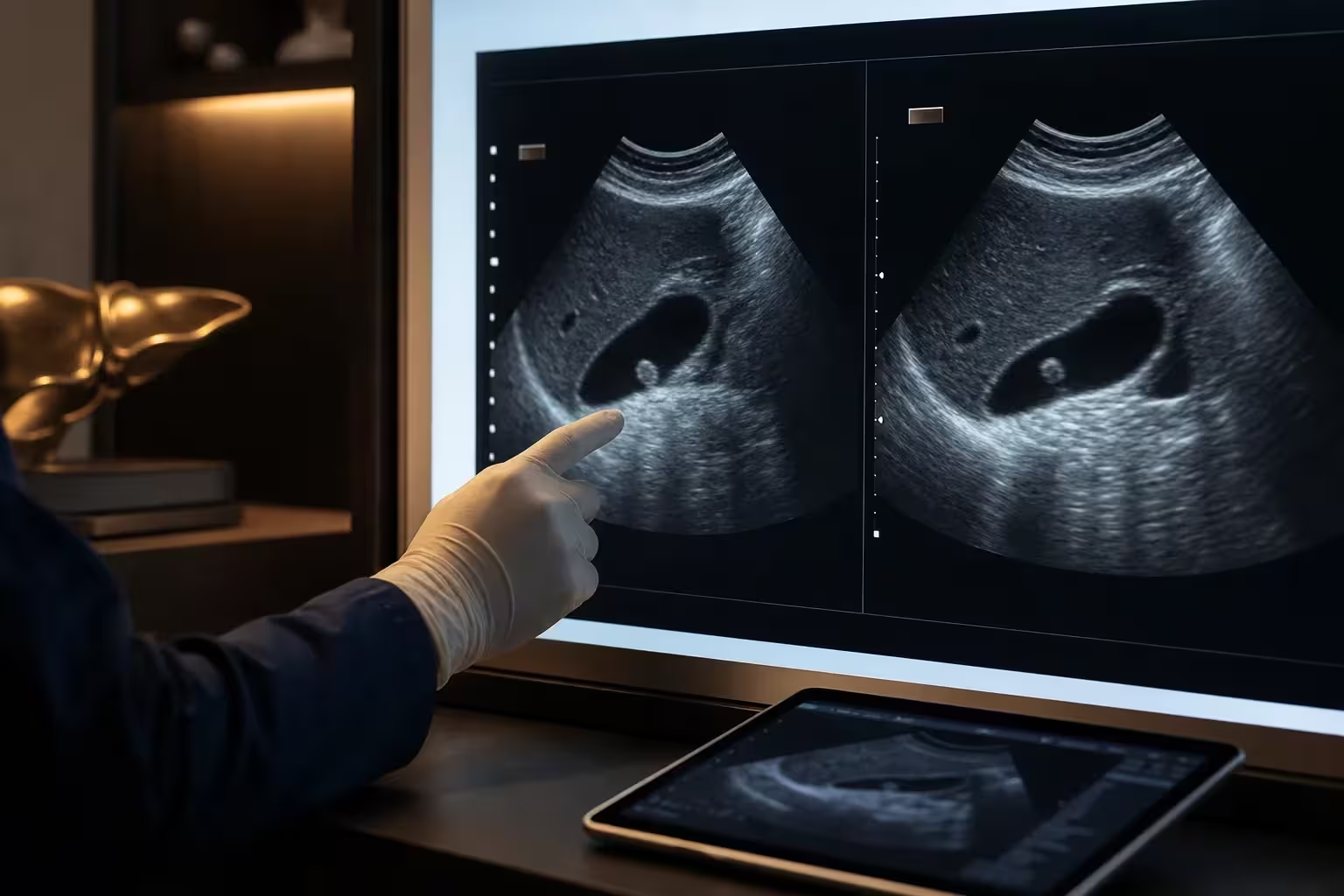
A gallbladder polyp is an increasingly common finding, especially because many people undergo abdominal ultrasound for different reasons. Receiving this diagnosis tends to cause immediate concern, with questions about severity, cancer risk, and the need for surgery. The good news is that most gallbladder polyps are small and benign, and they do not always require removal of the organ. Even so, it is important to understand the types of polyp, what makes them concerning, and when surgery is truly justified. This text gathers clear and responsible information on the subject, without ever replacing an individual assessment by a physician.
What a gallbladder polyp is
The gallbladder is a small pear-shaped organ located just below the liver, which stores and concentrates bile to help digest fats. A gallbladder polyp is a projection that grows from the inner wall of the organ toward its interior. The term 'polyp' describes only the shape of this lesion — a protrusion — and not its nature. In other words, calling something a polyp does not mean it is cancer or that it will turn into one. Many polyps are simply accumulations of cholesterol in the gallbladder wall, with no relationship to tumors. Careful assessment is precisely what helps distinguish benign situations from those that deserve more attention.
Types of gallbladder polyp
Not all polyps are the same. Understanding the main types helps explain why the approach varies so much from one case to another.
Cholesterol polyps (pseudopolyps)
These are the most common. They form from the deposit of cholesterol in the gallbladder wall and, for this reason, are also called pseudopolyps, since they are not true tumors. They tend to be small, often multiple, and have benign behavior. In the vast majority of cases, they do not represent a relevant risk and may simply be monitored, according to the medical assessment.
True polyps (adenomatous and others)
These are less frequent and correspond to a real growth of tissue in the gallbladder wall. Among them, adenomatous polyps draw the most attention because, in specific situations, they may be associated with a higher risk. It is important to point out that this risk depends on several features, assessed together, and not just on the fact that the polyp is 'true'. There are also lesions related to chronic inflammation of the gallbladder, assessed case by case.
How a gallbladder polyp is discovered
Most of the time, a gallbladder polyp is discovered by chance, during an abdominal ultrasound performed for other reasons — such as investigating abdominal pain, routine exams, or the evaluation of other organs. Ultrasound is the most widely used test to identify and monitor gallbladder polyps, since it is painless, without radiation, and widely available. In selected situations, the physician may request complementary tests, such as more detailed ultrasound, magnetic resonance, or CT scan, to better assess the features of the lesion. The choice depends on each patient's clinical picture.
Does a gallbladder polyp cause symptoms?
In most cases, a gallbladder polyp causes no symptoms, and that is precisely why it is usually an unexpected finding. When complaints do exist, they are often associated with other conditions, such as gallstones, rather than with the polyp itself. Some patients report discomfort in the upper right part of the abdomen, a feeling of poor digestion after fatty meals, or fullness, but these symptoms are nonspecific and may have various causes. Because they overlap with those of many common digestive conditions, symptoms should always be interpreted together with the imaging findings and the rest of the clinical history. For this reason, the presence of symptoms alone does not define the approach — it is part of a broader assessment made by the physician who knows your case.
Is a gallbladder polyp dangerous? The relationship with cancer
This is probably the greatest concern for those who receive the diagnosis. In general, most gallbladder polyps are benign and do not turn into cancer. Gallbladder cancer is a rare condition. Even so, there is medical interest in identifying the small group of polyps that show features associated with a higher risk, precisely in order to monitor them closely or indicate surgery when appropriate. In other words, saying that a polyp 'may be cancer' is not the same as saying that it 'is cancer' — it is a matter of assessing probabilities and acting prudently, without alarmism and without neglect.
Size and features that raise concern
The decision between monitoring and operating does not depend on a single factor, but on a set of features assessed by the physician. Among the most studied points in the literature are:
- The size of the polyp, with larger ones tending to deserve more attention than small ones.
- The growth of the polyp during follow-up, compared with previous exams.
- Certain imaging features, such as how the polyp appears on the gallbladder wall.
- The simultaneous presence of gallstones or inflammation.
- The patient's age and the existence of specific conditions assessed individually.
None of these factors alone defines the approach. It is the combination of them, analyzed by a digestive system surgeon, that guides the best decision for each case.
When to simply monitor with ultrasound
In many cases, especially when the polyp is small and has reassuring features, the approach may be follow-up with periodic ultrasounds, rather than immediate surgery. The purpose of this follow-up is to check whether the polyp remains stable or shows changes over time, such as growth. The frequency of the exams is defined individually by the physician, considering the features of the polyp and the patient's profile. Comparing each new ultrasound with the previous ones is often more informative than any single exam, since it is the pattern over time that best reflects how the polyp is behaving. Maintaining follow-up as directed is essential: stopping the exams on your own may cause a possible change to go unnoticed, while keeping to the schedule allows any evolution to be identified early and addressed calmly.
When a gallbladder polyp needs surgery
Surgery is usually considered when the set of features increases concern about risk, or when there are symptoms and other associated conditions. In general, gallbladder removal tends to be discussed in the following situations, always in an individualized way:
- Larger polyps, above certain sizes assessed by the physician.
- Polyps that grow significantly during follow-up.
- Polyps associated with gallstones, especially when there are symptoms.
- Imaging features that suggest greater attention.
- Particular patient situations that the physician considers relevant.
It is worth reinforcing that an indication for surgery does not necessarily mean the presence of cancer. In many cases, the operation is preventive in nature or aims to definitively clarify the nature of the lesion, offering peace of mind to the patient.
How the decision is individualized
The best approach for a gallbladder polyp arises from the sum of several elements: the features of the polyp on imaging, its evolution over time, the presence of symptoms or stones, the patient's age and health conditions, as well as their concerns and expectations. This broad view avoids both unnecessary surgery and risky delay. For this reason, more important than looking for ready-made answers on the internet is bringing the exams to a specialized consultation, where the physician can interpret the data in the full context of each person.
What gallbladder surgery is like
When surgery is indicated, the procedure performed is cholecystectomy, that is, removal of the entire gallbladder. The polyp alone is not removed, because assessing and treating the lesion safely involves removing the organ. In the vast majority of cases, surgery is done by laparoscopy — a minimally invasive technique, with small incisions through which a camera and delicate instruments are introduced. In selected situations, a robotic approach may be used, and open surgery, with a larger incision, is reserved for particular cases. Recovery from video surgery is usually faster than from open surgery, with less pain and an earlier return to activities, although the time varies according to the case.
Recovery and life without a gallbladder
After the gallbladder is removed, bile flows continuously from the liver into the intestine, and most people lead a normal life without important restrictions. In the first few days, some abdominal discomfort is common, and in the first weeks there may be greater sensitivity to very fatty meals, which usually improves over time and with dietary adjustments. Resuming activities progressively, following the team's instructions, contributes to a smoother recovery, and light movement such as short walks is often encouraged early on. The gallbladder is an auxiliary digestive organ, not essential to life, which is why the body adapts well to its absence and why removing it, when truly indicated, does not compromise long-term digestive health.
Common myths about gallbladder polyps
Some frequent misconceptions cause unnecessary anxiety or, conversely, lead to a lack of follow-up. It is worth clarifying a few points:
- 'Every polyp is cancer' — false. Most are benign, especially small cholesterol polyps.
- 'There is a medication or tea to dissolve the polyp' — there is no proven treatment that makes polyps disappear by home remedies.
- 'Every polyp needs immediate surgery' — false. Many can simply be monitored.
- 'If it does not hurt, there is no need to investigate' — the absence of symptoms does not remove the need for physician-guided follow-up.
- 'Removing only the polyp solves it' — the surgical approach involves removing the entire gallbladder, not just the lesion.
Frequently asked questions about gallbladder polyps
Can a gallbladder polyp turn into cancer?
Most gallbladder polyps are benign and do not turn into cancer. There is a small group of polyps with features associated with a higher risk, and that is precisely why follow-up and, in some cases, surgery are recommended. Individualized assessment is what makes it possible to distinguish these situations.
What size of polyp needs surgery?
There is no single number that applies to all cases. Size is one of the factors considered, but the decision also takes into account growth over time, imaging features, the presence of stones, and the patient's profile. For this reason, this decision should be made by the physician, case by case.
How often should I repeat the ultrasound?
The frequency of follow-up is individual and defined by the physician, according to the features of the polyp. Following the recommended schedule is important to detect any change early. Stopping the exams on your own is not recommended.
Can only the polyp be removed while keeping the gallbladder?
This is not the usual approach. When surgery is indicated, treatment consists of removing the entire gallbladder, which allows the lesion to be properly assessed and avoids the recurrence of problems in the organ.
When to see a specialist
If you have discovered a gallbladder polyp on an imaging exam, the most important step is to bring this result to a digestive system surgeon. A specialized assessment makes it possible to understand the features of the lesion, decide whether the case requires only follow-up or whether surgery is the best option, and when to perform it. Bringing your existing exams to the appointment — including older ones, which help compare the evolution — along with a list of symptoms and your written questions makes the assessment more objective. Every decision should consider the patient's full picture, not just the isolated presence of the polyp.
Discovering a gallbladder polyp does not have to be a reason for panic. In most cases, there is time to investigate calmly, compare exams, and plan the best approach with someone experienced in the subject. Understanding what a polyp is, its types, and the criteria that guide the decision is the first step toward facing the diagnosis with more calm and confidence.
Do you have questions about your case?
A specialized evaluation helps understand the best path, with clarity and security.