

Gallstones: symptoms, causes, and when surgery is necessary
Understand what gallstones (cholelithiasis) are, their symptoms, causes, the risks of complications, and in which situations surgery to remove the gallbladder is truly indicated.
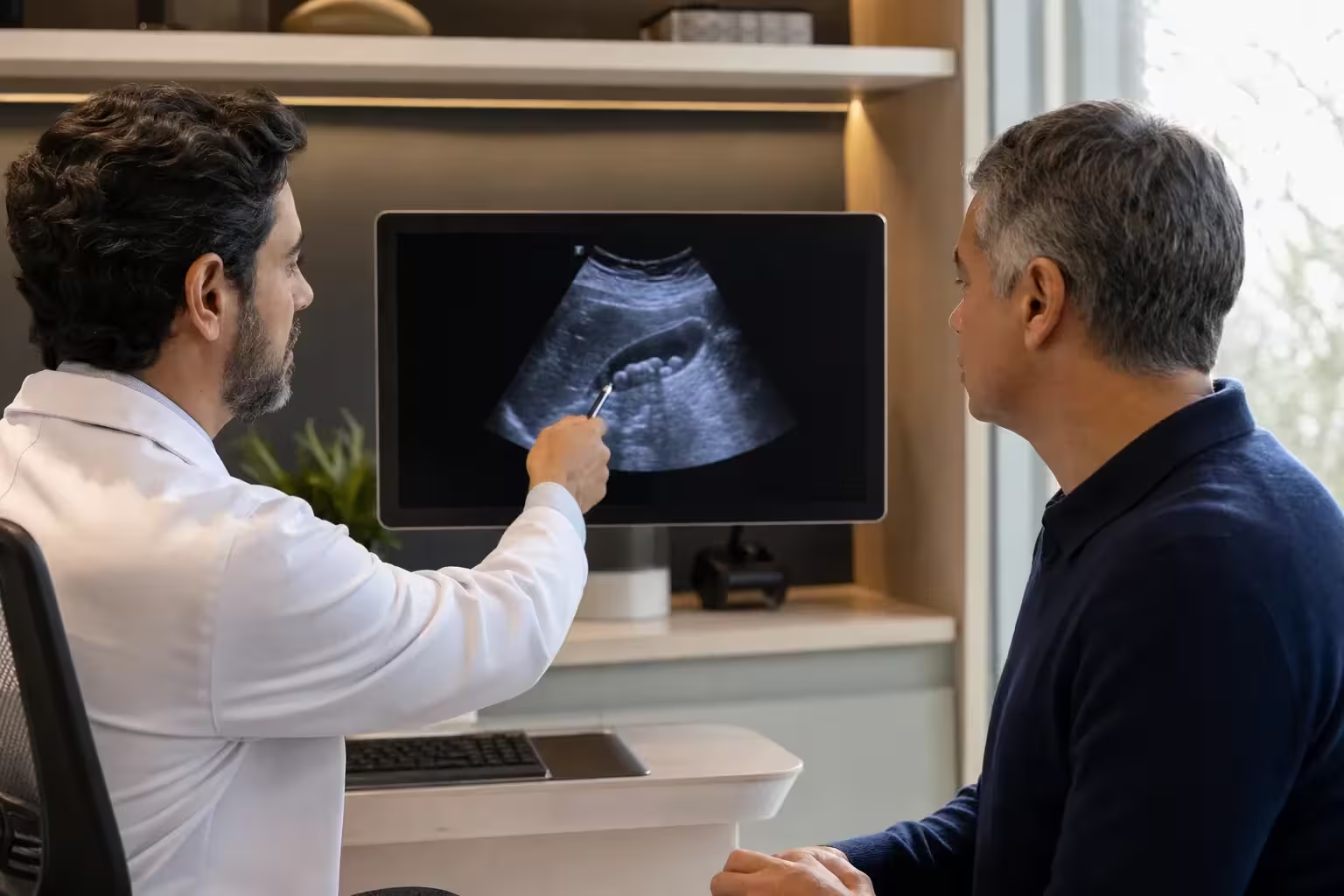
Gallstones, known in medicine as cholelithiasis, are among the most common conditions of the digestive system. A significant portion of the adult population is estimated to have gallstones at some point in life, often without knowing it. The good news is that most cases are benign and do not always require immediate treatment. Even so, it is essential to understand when gallstones begin to pose a risk, which symptoms deserve attention, and in which situations surgery becomes the safest approach. This text gathers clear and responsible information to help you better understand the subject — without ever replacing an individual assessment by a physician.
What the gallbladder is and what it does
The gallbladder is a small pear-shaped organ located just below the liver, on the right side of the abdomen. Its function is to store and concentrate bile, a fluid produced by the liver that helps digest fats. During meals, especially fattier ones, the gallbladder contracts and releases bile into the small intestine through the bile ducts. It is therefore an auxiliary digestive organ: important, but not essential to life. When the gallbladder must be removed, the body adapts and bile flows directly from the liver into the intestine.
What gallstones are
Gallstones are solid formations that develop when there is an imbalance in the composition of bile. They may be made up mainly of cholesterol, of pigments (such as bilirubin), or of a mixture of these components. Their size varies widely: from tiny grains resembling sand to stones several centimeters across. Some people have a single stone; others have dozens. Number and size alone do not define the severity of the condition — what matters most is whether the stones are causing symptoms or complications.
Why bile forms stones
When bile contains excess cholesterol, insufficient bile salts, or when the gallbladder does not empty properly, its components can crystallize and, over time, form stones. This process is usually slow and silent, which explains why many people live with stones for years without noticing.
Causes and risk factors
The formation of gallstones is multifactorial. Some factors increase the likelihood of developing them, although they do not cause the problem in isolation. Among the most recognized are:
- Female sex, especially during childbearing years, due to hormonal influence.
- Older age, since the risk increases over the years.
- Overweight and obesity, associated with higher cholesterol concentration in bile.
- Very rapid weight loss, including after bariatric surgery or restrictive diets.
- Pregnancy and the use of certain hormonal medications.
- Family history of gallstones.
- Diabetes and disorders of fat metabolism.
- Prolonged fasting and a diet low in fiber and high in fat.
Symptoms of gallstones
Many people with gallstones have no symptoms — these are the so-called asymptomatic stones, often discovered by chance in tests done for other reasons. When symptoms do appear, the most characteristic is biliary colic: an intense pain in the upper right abdomen or in the region below the breastbone, which may radiate to the back or the right shoulder.
Biliary colic usually arises after fatty meals, when the gallbladder contracts against a stone that temporarily blocks its outlet. The pain may last from a few minutes to a few hours and is often accompanied by other signs:
- Nausea and vomiting.
- A feeling of fullness or difficult digestion, especially after eating fatty foods.
- Abdominal bloating and discomfort after meals.
- Pain that recurs in episodes, with symptom-free intervals.
Warning signs that require immediate evaluation
Some symptoms indicate that gallstones may have progressed to a complication and warrant urgent medical attention: fever with chills, strong and persistent abdominal pain that does not subside, yellowing of the eyes and skin (jaundice), very dark urine, pale stools, and uncontrollable vomiting. When these signs appear, going to an emergency department is the most prudent course of action.
When the stone is asymptomatic
In most people who have never had symptoms, the stones remain stable and the lifetime risk of complications is relatively low. For this reason, in many cases of asymptomatic stones, the approach may be observation, with clinical follow-up, rather than immediate surgery. This decision, however, should be individualized, taking into account age, health conditions, the size and characteristics of the stones, and the presence of specific factors that may increase risk.
Possible complications
Although many cases are benign, gallstones can lead to complications when a stone blocks the flow of bile for a longer period. Knowing about these conditions helps explain why follow-up matters:
- Acute cholecystitis: inflammation of the gallbladder, with strong, persistent pain, fever, and frequently the need for surgery.
- Choledocholithiasis: when a stone migrates into the main bile duct, potentially causing jaundice and requiring specific procedures.
- Cholangitis: infection of the bile ducts, a serious condition combining pain, fever, and jaundice.
- Biliary pancreatitis: inflammation of the pancreas caused by a stone blocking the shared outlet between the bile ducts and the pancreas.
- Fistulas and intestinal obstructions, which are rarer situations.
How the diagnosis is made
The most widely used and efficient test to identify gallstones is abdominal ultrasound. It is a painless examination, without radiation and widely available, able to show the presence, number, and size of stones, as well as signs of inflammation. In specific situations, the physician may request complementary tests, such as magnetic resonance of the bile ducts (MR cholangiography), CT scan, or laboratory tests that assess liver and pancreas function. The choice depends on each patient's clinical picture.
When surgery is necessary
The most common question from those who discover gallstones is: 'do I need surgery?'. The answer depends on several factors, and there is no single rule for everyone. In general, surgery tends to be indicated when:
- There are symptoms, especially recurring episodes of biliary colic.
- A complication has already occurred, such as cholecystitis, pancreatitis, or stone migration.
- There are specific features of the stones or gallbladder that increase risk, assessed case by case.
- There are associated conditions that make follow-up riskier.
On the other hand, in people without symptoms and without relevant risk factors, observation may be a reasonable choice. The key point is that this decision be made together with a digestive system surgeon, who will assess the imaging, the history, and the expectations of each patient.
What gallbladder surgery is like
The definitive treatment for gallstones is removal of the organ, called cholecystectomy. It is important to clarify that not only the stone is removed: because a gallbladder that forms stones tends to form new ones, the procedure consists of removing the entire gallbladder. In the vast majority of cases, surgery is performed by laparoscopy — a minimally invasive technique, with small incisions through which a camera and delicate instruments are introduced. In selected situations, a robotic approach may be used. Open surgery, with a larger incision, is reserved for particular cases.
Recovery from laparoscopic surgery is usually faster than from open surgery, with less pain and an earlier return to activities. Even so, each body responds differently, and recovery time varies according to the clinical picture, the presence of previous complications, and each team's instructions.
Life without a gallbladder
A frequent question is whether it is possible to live well without a gallbladder. The answer is yes. After removal, bile flows continuously from the liver into the intestine, and most people lead a normal life without important restrictions. Some may notice, in the first weeks, greater sensitivity to very fatty meals, which usually improves over time and with dietary adjustments. Maintaining a balanced diet supports the adaptation.
How to tell biliary colic apart from other pains
Not every pain in the upper abdomen comes from the gallbladder. Gastritis, reflux, ulcers, liver or pancreas problems, and even pain of cardiac origin can cause similar symptoms. For this reason, a medical assessment is important to distinguish the source of the discomfort and to avoid both the wrong treatment and the delay of a relevant diagnosis. Describing precisely when the pain appears, where it is located, and how long it lasts helps the physician reason about the cause.
Some features help characterize biliary colic, although they do not replace clinical examination and imaging tests:
- A relationship with fatty meals, typically starting after eating.
- Pain concentrated in the upper right abdomen or just below the breastbone.
- Radiation toward the back or the right shoulder.
- Episodes that begin, reach a peak, and subside within a few hours, with pain-free intervals.
When the pain becomes continuous, very intense, or is accompanied by fever and jaundice, the picture is no longer a simple colic and may indicate a complication — a situation that requires immediate medical evaluation. Keeping a brief record of the episodes (time, foods, duration, and intensity) is valuable information for the consultation with the specialist.
Diet, prevention, and common myths
There is no proven way to dissolve stones that have already formed using diet, teas, or home remedies alone. Substances promoted as able to 'flush out the stone' have no demonstrated effectiveness and may even delay the correct diagnosis. In very specific cases, there are medications that dissolve certain types of cholesterol stones, but their use is limited, slow, and reserved for particular situations, always under medical guidance.
From a prevention standpoint, some measures help reduce the risk of new stones forming and support digestive health in general:
- Maintaining a healthy weight and avoiding sharp weight fluctuations.
- Favoring a balanced diet rich in fiber, fruits, vegetables, and whole grains.
- Moderating the intake of saturated fats and ultra-processed foods.
- Avoiding very long fasts, which reduce gallbladder emptying.
- Doing regular physical activity, according to your doctor's guidance.
Frequently asked questions about gallstones
Can gallstones turn into cancer?
Gallstones, on their own, are not cancer. Gallbladder cancer is a rare and distinct condition. Even so, the chronic inflammation associated with stones is one of the factors studied in relation to that risk in specific situations, which reinforces the importance of appropriate follow-up, especially in certain conditions assessed by the physician.
Do all gallstones need surgery?
No. Many people with asymptomatic stones can simply be monitored. Surgery is usually indicated when there are symptoms, complications, or specific risk factors. The best approach is always individual.
Can only the stone be removed while keeping the gallbladder?
This is not the usual approach. Because a gallbladder that forms stones tends to form new ones, removing only the stone would lead to recurrence. For this reason, surgical treatment consists of removing the entire gallbladder.
How long does recovery take?
With laparoscopic surgery, many people return to light activities within a few days, with specific guidance for greater exertion. The exact time varies according to the case, the presence of complications, and the team's recommendations.
When to see a specialist
If you have been diagnosed with gallstones — even without symptoms — or you have recurring abdominal pain after meals, it is worth talking to a digestive system surgeon. A specialized assessment makes it possible to understand whether the case requires only follow-up or whether surgery is the best option, and when to perform it. Every decision should consider the patient's full picture, not just the isolated presence of stones. Bringing your existing test results, a list of symptoms, and your written questions to the appointment helps make the assessment more objective.
Understanding gallstones is the first step toward making calmer, safer decisions. In most cases, there is time to investigate carefully, discuss alternatives, and plan treatment with someone experienced in the subject — avoiding both unnecessary intervention and risky delay.
Do you have questions about your case?
A specialized evaluation helps understand the best path, with clarity and security.