

Inguinal hernia: symptoms, risks, and surgical options
Understand what an inguinal hernia is, why it is more common in men, the symptoms, the risks of complications, and the surgical options for inguinal hernia.
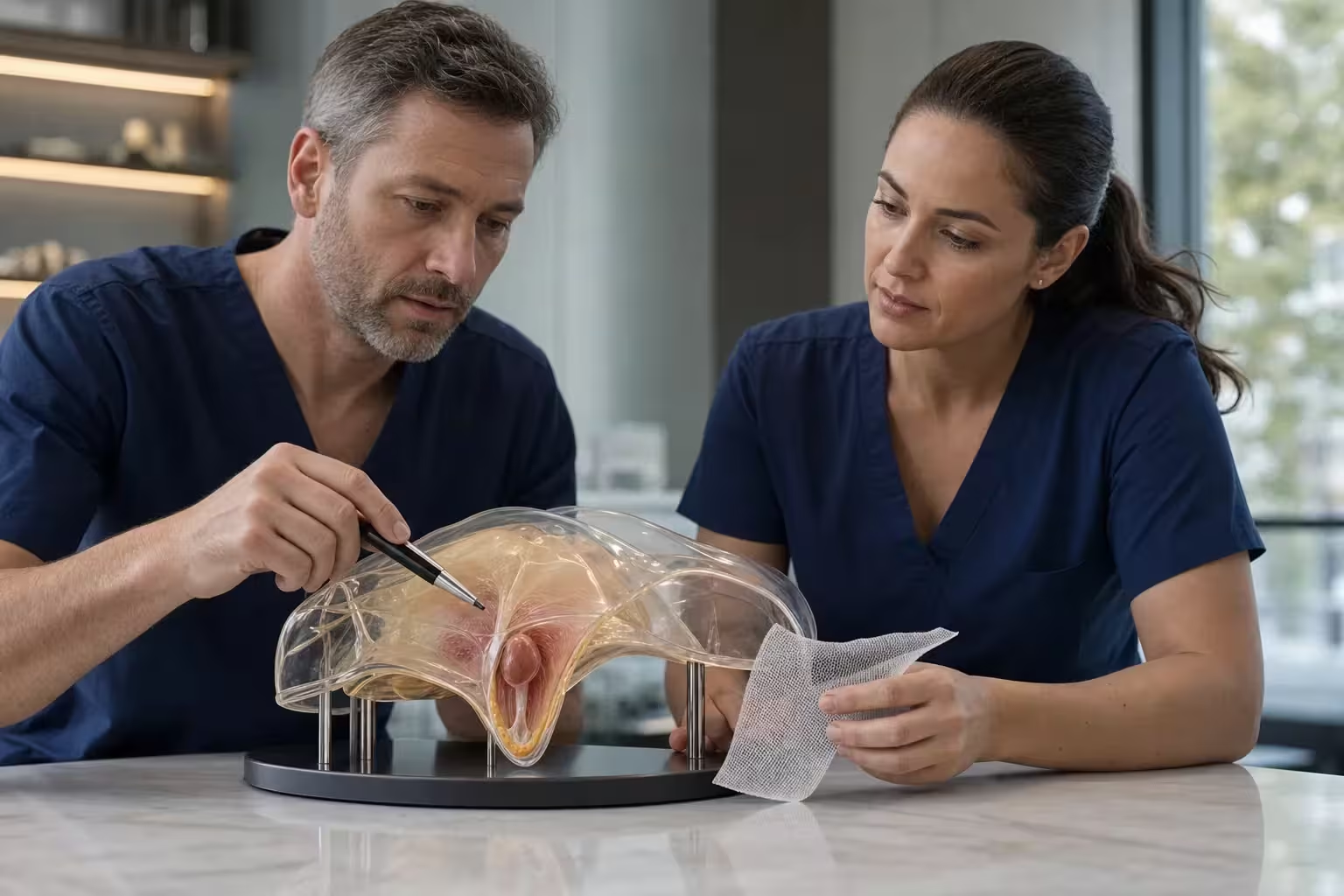
An inguinal hernia is the most common type of abdominal wall hernia and one of the most frequently performed surgeries in the world. It appears in the groin region, when part of the abdominal contents — usually a loop of intestine or fat — passes through a weak point in the wall and forms a bulge in that area, which is why many people call it a 'groin hernia'. It tends to be more frequent in men, for anatomical reasons, and it grows slowly and progressively over time. This text gathers clear and responsible information about the symptoms, the risks of complications, and the surgical options for inguinal hernia, to help you better understand the subject — without ever replacing an individual assessment by a physician.
What an inguinal hernia is
The inguinal region, or groin, is in the lower part of the abdomen, at the transition with the thigh. In that area there is a natural channel — the inguinal canal — through which important structures pass, which makes it, by nature, a weaker point in the abdominal wall. When that point gives way to internal pressure, the abdominal contents protrude outward and form the inguinal hernia. The result is a bulge in the groin that usually appears or grows when a person stands, strains, coughs, or lifts weight, and tends to decrease or disappear when they lie down. Like any hernia, it does not close on its own: once formed, it remains and, in most cases, enlarges progressively.
Why inguinal hernia is more common in men
An inguinal hernia can occur in anyone, including women and children, but it is significantly more frequent in men. This is explained by particularities in the development of the inguinal region: during the formation of the body, certain structures travel through the inguinal canal, leaving that area naturally more susceptible to weaknesses over the course of life. Add to this the effect of tissue aging and the situations that repeatedly raise abdominal pressure, and it becomes easier to understand why the groin is one of the points where hernias appear most frequently in men. Even so, the fact that it is more common in one sex does not diminish the importance of assessing each case individually.
Causes and risk factors
An inguinal hernia results from the combination of a weakness in the wall of the groin region and repeated increases in pressure inside the abdomen. Some factors favor its appearance or make it grow, although they do not cause the problem in isolation:
- Intense physical effort and repeated heavy lifting.
- Chronic cough, common in smokers and in some respiratory diseases.
- Constipation, which leads to straining during bowel movements.
- Difficulty urinating with repeated straining, in some situations.
- Overweight and obesity, which increase abdominal pressure.
- Aging, with a natural loss of strength and elasticity of the tissues.
- Family history and individual characteristics of the abdominal wall.
Symptoms of an inguinal hernia
The most characteristic sign is the bulge in the groin, which becomes more evident when straining and usually reduces when lying down. In many cases, especially at first, the hernia is small and causes few symptoms. Over time, however, other complaints may arise:
- A feeling of heaviness, discomfort, or mild pain in the groin, worse at the end of the day.
- Pain or a burning sensation locally when coughing, lifting weight, or straining.
- A bulge that grows over time and, in men, may descend toward the scrotum.
- Discomfort during physical activity or when standing for a long time.
- A pulling sensation or discomfort that improves with rest.
Direct and indirect inguinal hernia
From a technical standpoint, an inguinal hernia can be classified as direct or indirect, according to the route through which the abdominal contents protrude in the inguinal region. An indirect hernia is usually related to a weakness originating in the inguinal canal itself, while a direct one is more associated with weakening of the wall over the course of life. For the patient, this difference does not always change the symptoms noticed day to day, but it is relevant information for the surgeon, since it helps in planning the best repair technique. The exact definition is made during the medical assessment and, often, confirmed during the surgery itself.
Risks of not treating: incarceration and strangulation
Most inguinal hernias are reducible, meaning the protruding contents can be pushed back into the abdomen. The main risk of living with a hernia without follow-up is progression to complications. In an incarcerated hernia, the contents become trapped and no longer return to their place, which can cause pain and intestinal obstruction. The most serious situation is a strangulated hernia, in which the tightness compromises the blood supply to the trapped tissue, putting it at risk. This condition is a surgical emergency and requires immediate attention. Although not every hernia evolves this way, that risk exists and is one of the reasons why medical follow-up is important.
How the diagnosis is made
In most cases, the diagnosis of an inguinal hernia is clinical: the physician can identify it through conversation and physical examination, feeling the groin area and asking the patient to strain, cough, or stand up to make the bulge more evident. In some situations — when the hernia is small, when the presentation is not typical, or when it needs to be distinguished from other causes of groin bulging and pain — the physician may request imaging studies, such as ultrasound of the inguinal region or, in selected cases, CT or MRI. These studies help confirm the diagnosis and plan the surgery, when indicated.
Does an inguinal hernia always need surgery?
Surgery is the only treatment capable of definitively correcting an inguinal hernia, since it does not close on its own. Even so, not every hernia needs to be operated on immediately. In small hernias, with few or no symptoms and a low risk of complications, the physician may, in selected situations, propose periodic monitoring (watchful waiting). On the other hand, repair tends to be indicated when:
- There are bothersome symptoms, such as pain, discomfort, or limitation of activities.
- The hernia is growing progressively.
- There have been episodes of incarceration, with the contents trapped temporarily.
- There is a higher risk of complications, assessed case by case.
The decision to operate or to monitor should be individualized and discussed with a surgeon, taking into account the size of the hernia, the symptoms, the person's age, physical activity, and health conditions. Even when observation is possible, it is essential to know the warning signs that indicate the need for immediate care.
Surgical options for inguinal hernia
The goal of surgery is to reposition the contents and reinforce the weak point of the wall in the inguinal region. There are different techniques, and the choice depends on the characteristics of the hernia, the patient's history, and the team's assessment. In general, the main approaches are:
- Open surgery with mesh (the Lichtenstein technique and its variations): performed through an incision in the groin, placing a mesh to reinforce the wall.
- Laparoscopic surgery: minimally invasive, with small incisions, a camera, and delicate instruments, also using mesh.
- Robotic surgery: a form of minimally invasive approach assisted by a robotic platform, used in selected situations.
In the vast majority of modern repairs, a surgical mesh (prosthesis) is used, which reinforces the wall and helps distribute tension over the area, contributing to a reduced risk of the hernia returning. No technique is universally superior to the others, and none completely eliminates the possibility of recurrence. What exists is the approach most suitable for each case, defined together by the patient and the surgeon. Results and recovery times vary from person to person, and promises of a guaranteed result should be viewed with caution.
What recovery is like
Recovery from inguinal hernia surgery varies according to the technique used and each patient's characteristics. In general, minimally invasive approaches tend to bring less pain and a faster return to light activities, but open surgery also shows good recovery in most cases. It is common to be advised to avoid intense effort and heavy lifting for a few weeks, to allow the wall to heal properly. Many people resume light activities within a few days, but the return to greater exertion and to sports should follow the team's guidance. Some discomfort, swelling, or a pulling sensation in the operated area may occur in the first weeks and usually improves over time.
Prevention and everyday care
It is not always possible to prevent an inguinal hernia, especially when there is an individual predisposition. Even so, some measures help reduce pressure on the area and may contribute to lowering the risk or preventing worsening:
- Maintaining a healthy weight, relieving pressure on the abdominal wall.
- Lifting weight correctly, using the legs and avoiding overloading the abdomen.
- Treating constipation and avoiding excessive straining during bowel movements.
- Maintaining a balanced, fiber-rich diet and good hydration.
- Avoiding smoking, which is associated with chronic cough and poorer tissue quality.
- Strengthening the muscles in a guided way, respecting the limits of your body.
Common myths about inguinal hernia
Some popular beliefs get in the way of proper care for an inguinal hernia. A frequent myth is that the hernia resolves with belts, trusses, or binders: at most, these can offer temporary comfort, but they do not correct the wall defect or eliminate the risk of complications. Another mistake is believing that abdominal exercises or massage make the hernia disappear — once formed, it does not close on its own. It is also common to think that every hernia must be operated on urgently: many can be assessed calmly. On the other hand, it is dangerous to ignore warning signs, such as severe pain and a bulge that does not reduce, which indicate the need for immediate care.
Frequently asked questions about inguinal hernia
Can an inguinal hernia disappear on its own?
In adults, no. Once the opening in the inguinal region has formed, it does not close spontaneously, and the hernia tends to remain or enlarge. The definitive treatment is surgical. In children, some situations have their own particularities and should be assessed by a specialist.
Does every inguinal hernia need surgery?
Not necessarily right away. Small hernias, with few symptoms and low risk, can in some cases be monitored. In contrast, hernias with symptoms, that grow, or that carry a higher risk of complications usually have an indication for surgery. The decision is individual and should be made with the surgeon, always knowing the warning signs.
Is inguinal hernia surgery a major operation?
It is one of the most frequently performed surgeries and, in most cases, well established. It can be done through an open or minimally invasive technique, using mesh. Like any procedure, it involves stages of preparation, execution, and recovery, and should be performed by a qualified team. The details of each case are explained during the consultation.
After surgery, can an inguinal hernia come back?
Recurrence is possible, even though modern techniques and the use of mesh aim to reduce that chance. Factors such as the type of hernia, the quality of the tissues, and postoperative care influence the result. Following the team's instructions and adopting habits that relieve abdominal pressure helps achieve a good long-term outcome.
When to see a specialist
If you have noticed a bulge in the groin, feel discomfort when straining, or suspect an inguinal hernia, it is worth talking to a surgeon. A specialized assessment makes it possible to confirm the diagnosis, understand the characteristics of the hernia, and determine whether the case requires surgery or can be monitored, and at what point. Bringing a description of the symptoms, how long they have been present, and any tests already done to the appointment helps make the assessment more objective. When faced with warning signs such as severe pain and a bulge that does not reduce, however, the priority is to seek emergency care.
Understanding inguinal hernia is the first step toward making calmer, safer decisions. In most cases, there is time to investigate carefully, understand the treatment options, and plan surgery with someone experienced in the subject — while recognizing, at the same time, the situations in which acting quickly makes a difference.
Do you have questions about your case?
A specialized evaluation helps understand the best path, with clarity and security.