

Hiatal hernia: symptoms, diagnosis, and when to operate
Hiatal hernia: understand the symptoms, the types, its relationship with reflux, how it is diagnosed, and when surgical treatment is indicated.
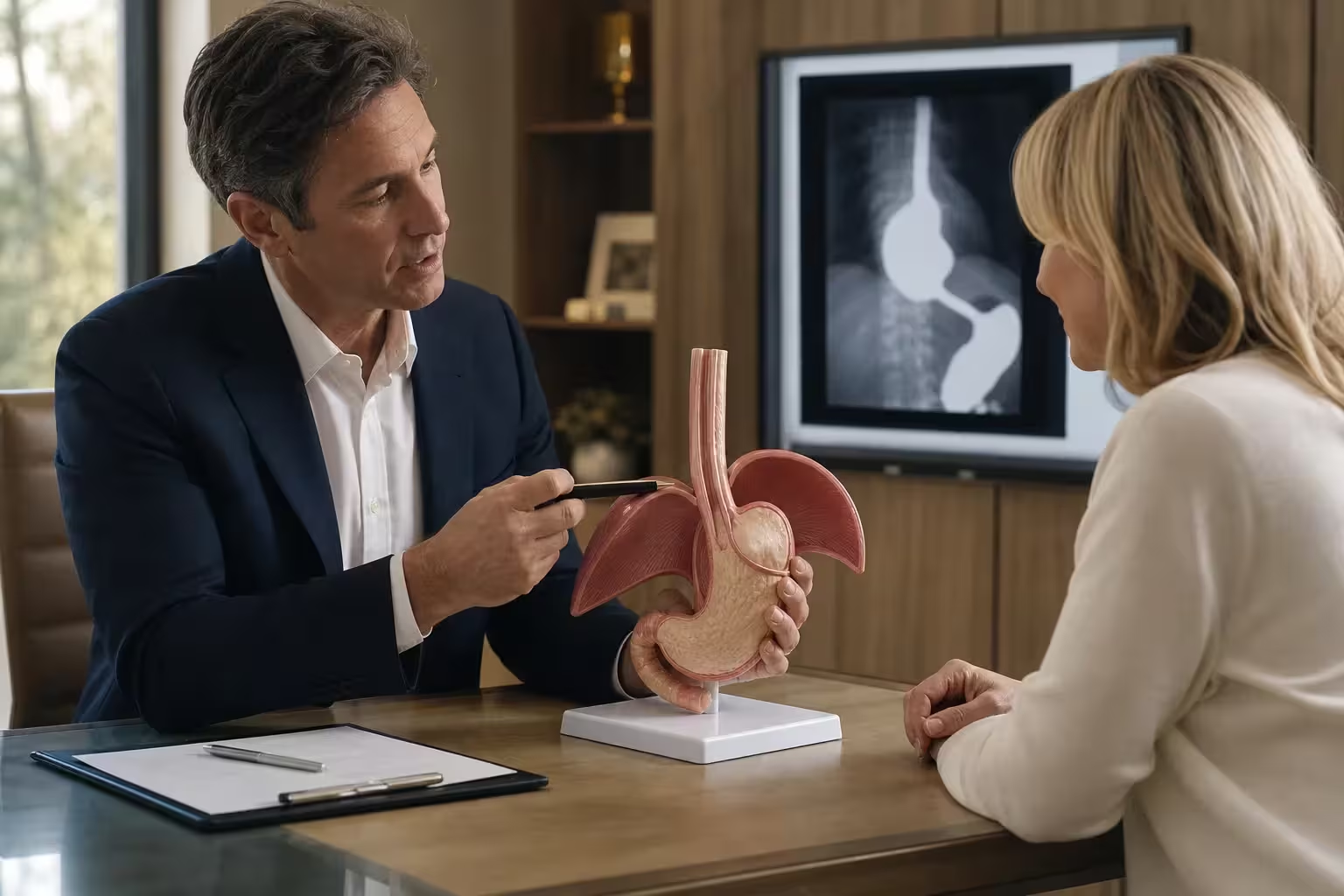
A hiatal hernia is a frequent condition of the digestive system and, at the same time, surrounded by questions. Many people discover they have a hiatal hernia by chance, in tests done for other reasons, and become worried without knowing what it really means. The good news is that a large share of cases is benign and does not require aggressive treatment. Even so, it is important to understand what a hiatal hernia is, which symptoms it can cause, what its relationship with reflux is, and in which situations it deserves special attention or surgical treatment. This text gathers clear and responsible information on the subject — without ever replacing an individual assessment by a physician.
What a hiatal hernia is
To understand a hiatal hernia, it helps to know the diaphragm, the dome-shaped muscle that separates the chest from the abdomen and takes part in breathing. The esophagus, the tube that carries food from the mouth to the stomach, passes through the diaphragm via a small opening called the hiatus before connecting to the stomach. We speak of a hiatal hernia when part of the stomach slides or projects into the chest through this opening, which becomes wider or looser. In other words, a portion of an organ that should stay in the abdomen comes to occupy a space in the chest. It is an anatomical change, not an isolated disease — what matters is understanding whether it causes symptoms or complications.
Types of hiatal hernia
Hiatal hernias are not all the same. Understanding the main types helps explain why some are considered simpler and others require more attention:
- Sliding hiatal hernia: the most common. In it, the junction between the esophagus and the stomach slides upward, toward the chest, and can return to its normal position. It is usually associated with reflux.
- Paraesophageal hiatal hernia: less frequent, but potentially more concerning. In it, part of the stomach projects into the chest alongside the esophagus, while the junction may remain in place. In specific situations, there may be a risk of mechanical complications.
- Mixed and large-volume hernias: they combine features of both types or involve a larger portion of the stomach, requiring an individualized assessment.
Most people have small, sliding hernias that cause few or no symptoms. Paraesophageal and large-volume hernias are less common, but they deserve a more careful assessment, precisely because of the possibility of complications in certain cases.
The relationship between hiatal hernia and reflux
One of the most common questions is about the link between hiatal hernia and gastroesophageal reflux. Between the esophagus and the stomach there is a natural barrier that prevents the backflow of stomach contents. This barrier depends both on a valve-like muscle, the lower esophageal sphincter, and on the reinforcement provided by the diaphragm in the region of the hiatus. When there is a hiatal hernia, this barrier can become weakened, favoring the rise of acidic stomach contents into the esophagus. For this reason, hiatal hernia and reflux often go together in many patients. It is important, however, to clarify that not every hiatal hernia causes reflux, and not every reflux is caused by a hernia. They are related but distinct conditions.
Causes and risk factors
A hiatal hernia can arise from a combination of factors, many of them related to increased pressure inside the abdomen or to the weakening of the tissues around the hiatus. Among the most associated factors are:
- Older age, since tissues tend to lose firmness over the years.
- Overweight and obesity, which increase pressure on the abdomen.
- Pregnancy, due to abdominal pressure and the changes of that period.
- Intense and repeated physical exertion, as well as lifting weights without guidance.
- Chronic cough and situations that recurrently increase abdominal pressure.
- Constipation with frequent straining to have a bowel movement.
- Individual predisposition and the characteristics of each person's tissues.
Symptoms of a hiatal hernia
Many people with a hiatal hernia have no symptoms, especially when the hernia is small. In those cases, it is usually discovered by chance. When symptoms do appear, they are generally related to reflux and digestive discomfort. The most frequent include:
- Heartburn and burning that rise from the stomach toward the chest.
- Regurgitation, with the return of an acidic taste or of food to the mouth.
- A feeling of fullness and difficult digestion after meals.
- Discomfort or pain in the upper abdomen or behind the breastbone.
- Frequent belching and a sensation of early fullness when eating.
- In some people, cough, hoarseness, or throat clearing related to reflux.
It is worth remembering that the intensity of symptoms does not always correspond to the size of the hernia. Small hernias can cause considerable discomfort in some people, while larger ones, in others, may go unnoticed. For this reason, medical assessment is important to relate the symptoms to each patient's real situation.
When a hiatal hernia is dangerous
The question 'is a hiatal hernia dangerous?' is very common and deserves a balanced answer. In the vast majority of cases, especially in small sliding hernias, the condition is benign and does not pose an immediate risk. The greater concern falls on specific situations, particularly in paraesophageal or large-volume hernias, in which a significant portion of the stomach is located in the chest. In those cases, there is a possibility — although it is not the rule — of mechanical complications.
Warning signs that require immediate evaluation
Some symptoms may indicate that a hiatal hernia has progressed to a complication, such as twisting or trapping of part of the stomach, and warrant urgent medical attention: strong and sudden pain in the chest or upper abdomen, significant difficulty swallowing, persistent vomiting, inability to pass gas or have a bowel movement, as well as vomiting blood or dark stools. Other signs that require evaluation, even if not an immediate emergency, include unexplained weight loss and unexplained anemia. When these situations arise, going to an emergency department is the most prudent course of action.
How the diagnosis is made
The diagnosis of a hiatal hernia usually involves the analysis of symptoms combined with tests that allow visualization of the anatomy of the esophagus and stomach. Among the most used are:
- Upper digestive endoscopy: allows direct visualization of the region where the esophagus and stomach join, identification of the hernia, assessment of signs of reflux, and biopsies when needed.
- Contrast imaging studies: examinations in which the patient swallows a contrast agent that helps show the shape and position of the stomach in relation to the diaphragm.
- Esophageal pH monitoring (pH-metry): assesses the amount and frequency of acid reflux, useful when reflux is a central concern.
- Esophageal manometry: analyzes the strength and coordination of esophageal movements, information that is especially relevant when surgery is being considered.
Not all patients need all of these tests. The choice depends on the clinical picture, the symptoms, and the physician's suspicion. When surgical treatment is being considered, tests such as manometry and pH monitoring take on special importance, as they help plan the best approach and confirm the relationship between the hernia and the symptoms.
Medical treatment of a hiatal hernia
In most cases, especially in small hernias associated with reflux, the initial treatment is medical rather than surgical. The goal is to control the symptoms, mainly reflux, and improve quality of life. Among the main measures are lifestyle changes:
- Maintaining a healthy weight and avoiding excess weight, which increases abdominal pressure.
- Avoiding large meals and not lying down right after eating.
- Raising the head of the bed in people with nighttime symptoms.
- Reducing foods that tend to trigger reflux, such as fried foods, caffeine, alcohol, and carbonated drinks.
- Quitting smoking.
- Treating constipation and avoiding unnecessary abdominal straining.
When lifestyle changes are not enough to control the associated reflux, the physician may prescribe medications that reduce acid production or protect the esophageal lining. The choice, dose, and duration of use should always be defined by the professional, taking into account the individual situation and the response to treatment.
When surgery is indicated
Hiatal hernia surgery is not the first option for most people, but it comes into consideration in specific situations, assessed case by case. In general, surgical treatment tends to come up for discussion when:
- There is significant, persistent reflux that does not respond well to well-conducted medical treatment.
- There is a paraesophageal or large-volume hernia, with a risk of mechanical complications.
- Significant symptoms related to the volume of the hernia occur, such as difficulty swallowing, recurrent pain, or marked early fullness.
- A complication has already occurred, such as episodes of trapping or twisting of part of the stomach.
- There are associated complications of reflux, assessed together with the full picture.
The decision for surgery is always shared between the patient and the digestive system surgeon, considering the tests, the symptoms, the expectations, and the possible risks and benefits. It is not an automatic choice upon diagnosis, but an individualized assessment in which alternatives are weighed and doubts are clarified before any decision.
How surgery is performed
Hiatal hernia surgery has two main goals: to reposition the stomach in the abdomen and to rebuild the barrier that prevents reflux. To do this, the surgeon reduces the hernia, bringing the portion of the stomach back to its position, and reinforces the opening of the hiatus in the diaphragm, narrowing it appropriately. In most cases, a fundoplication is also performed, a procedure in which the upper part of the stomach is wrapped around the final portion of the esophagus, reinforcing the antireflux valve. In this way, both the hernia and the associated reflux are treated.
In the vast majority of cases, surgery is performed by laparoscopy, a minimally invasive technique with small incisions through which a camera and delicate instruments are introduced. In selected situations, a robotic approach may be used. Open surgery, with a larger incision, is reserved for particular cases. It is important to understand that no technique offers an absolute guarantee of results: the objectives, expected benefits, and possibilities of each approach should be discussed individually with the surgeon, without promises of a definitive cure.
What recovery is like
Recovery from laparoscopic hiatal hernia surgery is usually faster than from open surgery, with less pain and an earlier return to activities. In the first days and weeks, there are commonly specific instructions about diet, which generally progresses from liquids and soft foods toward the usual diet gradually. Some people report, at first, difficulty swallowing certain foods or a sensation of early fullness, symptoms that tend to improve over time. Each body responds differently, and recovery time varies according to the case, the technique used, and the team's instructions.
Common myths about hiatal hernia
There are many mistaken ideas surrounding hiatal hernia. Clarifying a few points helps in making calmer decisions:
- "Every hiatal hernia needs surgery": this is not true; most are monitored and treated medically.
- "A hiatal hernia always causes serious symptoms": many are small and asymptomatic, discovered by chance.
- "A hiatal hernia turns into cancer": the hernia itself is not cancer; what requires follow-up is chronic reflux and its possible complications, when present.
- "Abdominal exercise cures the hernia": no exercise repositions the stomach; physical activity should be guided, especially in those with symptoms.
- "Teas and home remedies solve it": they may bring momentary relief, but they do not replace proper evaluation and treatment.
Frequently asked questions about hiatal hernia
Is a hiatal hernia curable?
A hiatal hernia is an anatomical change. Medical treatment controls symptoms well in most people, although it does not correct the anatomy. Surgery, in selected cases, corrects the hernia and reinforces the antireflux barrier, but results are individual and should be discussed with the surgeon, without universal promises.
Does every hiatal hernia need surgery?
No. Most hernias, especially small sliding ones, are monitored and treated medically. Surgery is reserved for specific situations, such as severe reflux that does not respond to treatment or larger-volume hernias with a risk of complications.
Can a hiatal hernia come back after surgery?
As with other surgeries, there is a possibility of recurrence over time, which varies according to the case. For this reason, follow-up after surgery remains important, and care with habits helps maintain the results.
Can I do physical activity with a hiatal hernia?
In general, yes, but the activity should be guided. Exercises that sharply increase abdominal pressure can worsen symptoms in some people. It is best to talk to your doctor to adapt the practice to your situation.
When to see a specialist
If you have been diagnosed with a hiatal hernia — even without symptoms — or you have frequent heartburn, regurgitation, and digestive discomfort, it is worth talking to a digestive system surgeon or an esophagus specialist. A specialized assessment makes it possible to understand the type and size of the hernia, its relationship with the symptoms, and whether the case requires only follow-up and medical treatment or whether surgery is an option to consider. Warning signs, such as significant difficulty swallowing, intense pain, unexplained weight loss, or bleeding, deserve more immediate evaluation. Bringing your existing test results, a list of symptoms, and your written questions to the appointment helps make the assessment more objective and complete.
Understanding a hiatal hernia is the first step toward dealing with the diagnosis more calmly. In most cases, there is time to investigate carefully, adjust habits, control reflux, and, only when necessary, discuss surgery with someone experienced in the subject — avoiding both excessive worry and the postponement of care that could improve quality of life.
Do you have questions about your case?
A specialized evaluation helps understand the best path, with clarity and security.