

Pancreatic cyst: when can it pose a risk?
Understand what a pancreatic cyst is, why many are incidental and benign, which types deserve attention, and when surveillance or surgery is indicated.
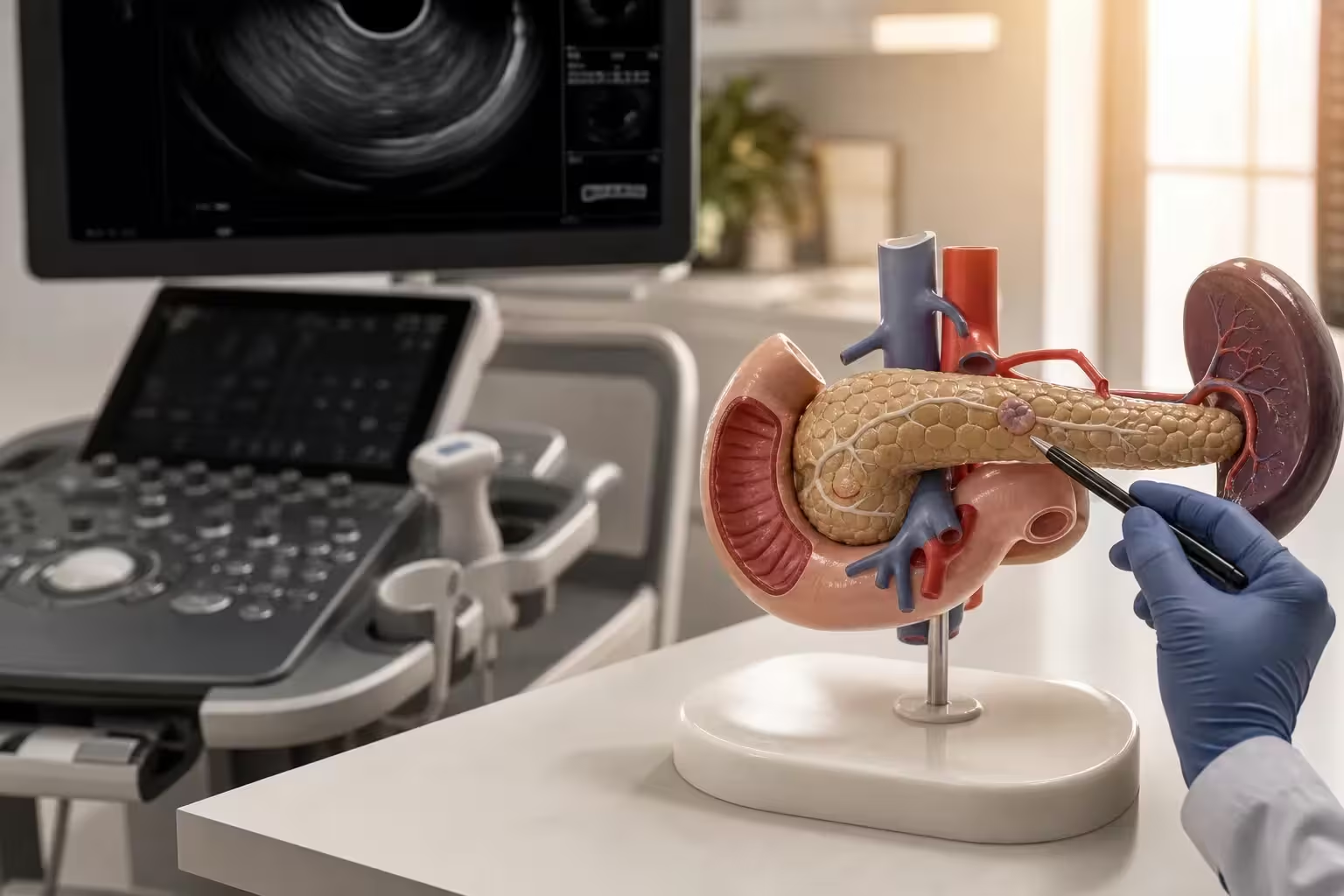
Learning about a pancreatic cyst on an imaging test often causes immediate worry — after all, the word pancreas raises apprehension in many people. It is important to begin with a reassuring and honest clarification: most pancreatic cysts are discovered by chance, during tests done for other reasons, and a good portion of them are not cancer and will not become cancer. At the same time, some types of pancreatic cyst do deserve attention and follow-up, because they behave differently over time. Understanding this distinction helps avoid both unnecessary alarm and neglect. This text gathers responsible, educational information about the pancreatic cyst — when it is merely a benign finding and when it can pose a risk — without ever replacing an individual assessment by a physician.
What the pancreas is and where it sits
The pancreas is a gland located in the upper abdomen, behind the stomach, near the duodenum, the liver, and the bile ducts. It has two main functions: producing enzymes that help digest food and making hormones, such as insulin, that regulate blood sugar. Because it lies in a deep position, changes in the pancreas do not always cause symptoms. This explains why many cysts go unnoticed for quite a while and end up being identified only when a person has a CT scan or MRI for a completely different complaint.
What pancreatic cysts are
A pancreatic cyst is, in simple terms, a collection of fluid inside or around the organ, usually bounded by a wall. There are several types, with very different origins and behaviors. Some are just accumulations of fluid with no relationship to cancer; others are lesions that produce fluid and that, depending on their features, may carry variable risk over the years. For this reason, saying only that someone has a pancreatic cyst is incomplete: what really matters is understanding which type of cyst it is, what its features are, and how it behaves over time.
Why cysts have become more common on tests
In recent decades, the broader use of high-quality imaging has meant that many pancreatic cysts are now detected, including small and silent ones. This does not necessarily mean they have become more common, but rather that we are seeing better what used to go unnoticed. A large part of these findings corresponds to small, symptom-free cysts, which most of the time require only careful observation.
Many cysts are incidental and not cancer
It is worth reinforcing this point, because it is a source of great anxiety: finding a pancreatic cyst is not the same as receiving a cancer diagnosis. A significant portion of cysts are benign and remain stable for many years. The role of specialized evaluation is precisely to separate, methodically, the cysts that can simply be monitored from those that deserve closer surveillance or, in specific situations, a surgical approach. This analysis is done case by case, considering the type of cyst, its size, its features on the tests, and the person's overall health.
Main types of pancreatic cyst
Although there are several classifications, some types appear more frequently and help explain why the approach varies so much from one case to another. In simplified, accessible language:
- Serous cyst (serous cystadenoma): usually has benign behavior and a low risk of turning into cancer. It often needs only follow-up, except when it grows a lot or causes symptoms.
- Mucinous cysts (mucinous cystic neoplasm): produce a thick fluid and have variable potential to evolve over time, which is why they are evaluated more closely.
- IPMN (intraductal papillary mucinous neoplasm): a type of cyst that communicates with the pancreatic ducts. Depending on its features and which duct it involves, the risk varies considerably, and this is why IPMN is one of the most studied and monitored cysts.
- Pseudocyst: a fluid collection that usually appears after pancreatitis (inflammation of the pancreas). It is not a tumor and has, in itself, no relationship to cancer, although it may require its own treatment in some situations.
Why the type of cyst changes everything
The approach to a pancreatic cyst depends directly on its type. A pseudocyst after pancreatitis has a completely different meaning from a mucinous cyst or an IPMN. This is why precise characterization — done with appropriate tests and specialized evaluation — is so important. Without understanding the type of lesion, it is not possible to decide safely between simply observing and intervening.
Can a pancreatic cyst turn into cancer?
This is probably the biggest question for anyone who receives the diagnosis. The honest answer is: it depends on the type of cyst. Most cysts have a low risk of turning into cancer, and many have practically none. Some types, however, especially certain mucinous cysts and particular IPMNs with specific features, carry a higher risk of evolving over the years — not immediately, but in a way that justifies follow-up. This is precisely why surveillance exists: identifying signs of change early makes it possible to act at the right time. Having a cyst with risk potential does not mean it will necessarily become cancer; it means it deserves to be watched carefully.
Which features draw the most attention
During evaluation, some aspects of the cyst and of the clinical picture lead the team to closer surveillance. Among these are the size and growth of the cyst over time, the presence of solid components inside it, involvement of the main pancreatic duct, dilation of that duct, and the appearance of symptoms such as jaundice (yellowing), persistent pain, or episodes of pancreatitis. None of these findings, in isolation, defines a diagnosis, but their combination guides the physician on the degree of attention needed. Each element is interpreted within the patient's full context.
How the cyst is evaluated
Investigating a pancreatic cyst usually combines different resources, chosen according to each case. Among the main ones are:
- Magnetic resonance imaging, often with MR cholangiography, which provides detailed images of the cyst and its relationship with the pancreatic ducts.
- Computed tomography, useful for characterizing the lesion and the rest of the abdomen.
- Endoscopic ultrasound, which brings the device close to the pancreas from within the digestive tract and allows a thorough assessment, plus the possibility of collecting fluid from the cyst.
- Analysis of the cyst fluid, when indicated, which may provide additional information about its nature.
Not every cyst needs all of these tests. Deciding which ones to perform, and how often to repeat them, is part of an individualized strategy. The goal is not to accumulate tests, but to obtain the information needed for a safe decision, with the least possible discomfort for the patient.
When it is surveillance and when it is surgery
Faced with a pancreatic cyst, there are basically two possible paths: follow-up (surveillance) and surgery. Surveillance consists of repeating tests at defined intervals to observe whether the cyst changes in size or features. It is the most frequent approach, especially for small cysts, without concerning signs, in people who have no symptoms. Surgery, on the other hand, is usually considered when there are features that indicate higher risk, when the cyst grows significantly, when relevant symptoms appear, or when the type of lesion, by its nature, warrants removal. This decision always takes into account the balance between the risk of the cyst itself and the risk of an intervention, weighing the patient's overall health.
The weight of the individualized decision
There is no automatic rule that fits everyone. Two seemingly similar cysts may call for different approaches depending on the person's age, health conditions, symptoms, and the detailed features of the lesion. For this reason, the decision between observing and operating should be built together by the patient and a team experienced in pancreatic diseases, with clear information about the pros and cons of each path.
Why specialized follow-up matters
Pancreatic cysts are a clear example of a situation in which follow-up over time makes a difference. Because some types can change over the years, keeping organized surveillance — with tests at appropriate intervals and periodic reassessments — makes it possible to identify any change early and act at the right moment. This follow-up is best carried out by professionals familiar with the subject, able to interpret the subtleties of the tests and to adjust the strategy according to how things evolve. Abandoning follow-up because you believe 'it was nothing' can be as harmful as becoming needlessly alarmed.
Symptoms that deserve attention
Most pancreatic cysts are silent, but some symptoms may be associated with larger lesions or with certain situations and deserve evaluation: persistent pain in the upper abdomen, jaundice (yellowing of the eyes and skin), involuntary weight loss, frequent nausea, or episodes of pancreatitis. These signs do not necessarily mean something serious, but they justify seeking evaluation to understand their origin. As with other pancreatic conditions, it is the persistence and combination of symptoms that usually call for closer attention.
Frequently asked questions about pancreatic cysts
Is a pancreatic cyst dangerous?
It depends on the type. Many cysts are benign and low-risk, remaining stable for years. Others, especially certain mucinous cysts and particular IPMNs, require more attention because of their behavior over time. For this reason, the correct answer is not a simple yes or no, but rather a careful evaluation of each case to define the actual degree of risk.
Does every pancreatic cyst need surgery?
No. Most cysts, especially small ones without concerning features, are simply monitored with periodic tests. Surgery is reserved for specific situations, when the cyst's features or the presence of symptoms indicate that removal is the safest approach.
What is IPMN?
IPMN is the abbreviation for a type of cyst that communicates with the pancreatic ducts. It is much studied because its risk varies according to its features, especially whether it involves the main duct and whether it shows certain signs on the tests. Many IPMN cases are simply monitored; others, depending on their features, may call for a more active approach. The decision is always individualized.
How often do I need to repeat the tests?
There is no single interval for everyone. The frequency of follow-up depends on the type of cyst, its size, its features, and how it evolves over time. The specialist defines and adjusts this schedule case by case, spacing out or bringing forward the tests according to the stability of the lesion.
When to see a specialist
If you have discovered a pancreatic cyst on a test — even without symptoms — or you have persistent complaints such as upper abdominal pain, jaundice, or unexplained weight loss, it is worth talking to a digestive system surgeon or a specialist in diseases of the pancreas and bile ducts. Specialized evaluation makes it possible to characterize the cyst correctly, define whether it should merely be observed or deserves a more active approach, and organize an appropriate follow-up plan. Bringing your existing tests to the appointment, including previous images for comparison, greatly helps in assessing how the lesion has evolved over time. The goal is always to find the balance between careful monitoring and avoiding unnecessary interventions.
Discovering a pancreatic cyst is rarely a reason to panic, but it is usually a good reason for a careful evaluation. Understanding that most of these findings are benign, and that the cases with risk potential can be followed in an organized way, helps you get through this moment with more peace of mind. With honest information and appropriate follow-up, it is possible to make safe decisions at the right time, always with the support of someone experienced in the subject.
Do you have questions about your case?
A specialized evaluation helps understand the best path, with clarity and security.